George Walden
Young Captain Jack · The Son of a SoldierGeorge Walden is a wounded soldier whose brief stay in the Ruthven household becomes decisive in the struggle over Jack Ruthven’s identity. Shot in the shoulder and initially unable to speak, he is nursed by the Confederate surgeon, Mrs. Alice Ruthven, and Marion Ruthven. Once he can talk, his experience in the hospital corps supplies independent testimony against Dr. Mackey: Walden knows the doctor personally, distrusts him, and identifies him as a fraud. His evidence does not by itself establish Jack’s true parentage, but it undermines the false version imposed by Mackey and helps clear the way for Colonel Stanton’s later proof that Jack is his son.
Wounded Soldier and Patient
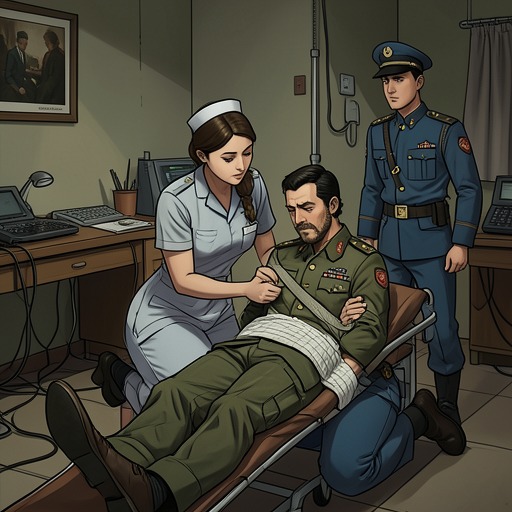
George Walden is introduced among the wounded soldiers staying at Mrs. Alice Ruthven’s home. A bullet has struck his shoulder, producing a wound described as both painful and dangerous. For several days he lies speechless while the Confederate surgeon, Mrs. Ruthven, and Marion do what they can to ease his suffering. His condition places him within the wartime humanitarian world of the Ruthven household, where the mansion functions as a place of treatment rather than merely a private plantation residence.
Walden’s recovery is tied especially to Marion’s care. When he finally begins speaking to her, he recognizes her kindness and calls her an angel of mercy. Marion answers that helping him also helps the Southern cause, but immediately warns him not to overexert himself because too much talking could delay his recovery. The exchange establishes Walden as both a vulnerable patient and a morally serious witness: his first meaningful conversation arises from dependence and gratitude, yet it soon develops into testimony with consequences far beyond his sickroom.
Knowledge of Dr. Mackey
Walden’s importance begins when Marion asks whether his hospital service ever brought him into contact with Dr. Mackey. He confirms that he knows the doctor well, but his darkened brow and uneasy manner show that the association is unwelcome. When Marion asks whether Mackey is her friend, Walden responds cautiously, implying that what he knows would bring no credit to the doctor. His reluctance gives the disclosure the shape of a reluctant but credible witness account rather than casual gossip.
Marion explains that Jack is her adopted brother and that Dr. Mackey has appeared claiming him as a son. Walden rejects the claim as impossible on the ground that Mackey is a bachelor. He then hears Mackey’s asserted story: that he was married to Jack’s mother, the woman shipwrecked on the Ruthven shore who died at the house a few days later. Walden directly contradicts this narrative, declaring Dr. Mackey a fraud and identifying Philadelphia as the place from which the doctor came. Walden further recalls that Mackey once operated a mail-order medical bureau of some kind until the Post-office Department stopped it as a swindle. This account supplies a concrete criminal history behind the family’s instinctive distrust.
Walden also offers evidence about Mackey’s character from wartime conduct. He says that the doctor treated one of his wounded companions worse than a dog and that Walden nearly confronted him over it. The detail connects Mackey’s alleged imposture with a broader pattern of cruelty and professional dishonesty. It also explains why Walden’s reaction is personal: his opposition is not produced solely by Marion’s question or by sympathy for Jack, but by his own experience of Mackey’s behavior toward helpless soldiers.
Evidence in the Identity Conflict
Walden’s testimony enters a larger chain of competing explanations for Jack’s identity. Jack has first been told that he is a nobody who does not belong to the Ruthven family. Marion then reveals that the Ruthven parents adopted him when he was three or four, making him John Ruthven in the eyes of the law and her brother within the family. The wreck on Hemlock Bluff provides the earliest known circumstance of his arrival, while the dead woman’s unmarked clothing, lace handkerchief, and worn ring preserve fragments of a past that no one can initially read.
Against that uncertainty, Mackey offers the most aggressive version of the past by claiming, “Jack, I am your father!” Walden’s account attacks the credibility of this claim before Jack can be compelled to accept it. Marion is eager to bring Walden’s statement to Mrs. Alice Ruthven and Jack, but she initially misses them because they have gone to town. When Jack later hears that Walden considers Mackey a fraud and believes he can prove it, the information gives him hope that his revulsion toward Mackey can be supported by external evidence rather than left as a private feeling.
Walden’s testimony remains incomplete in one important respect. He can discredit Mackey, but he cannot yet identify Jack’s real father. That distinction matters to the plot’s logic. The mystery is not solved merely because one claimant is exposed; it must eventually be resolved through another, stronger evidentiary connection. The later discovery of the black tin box taken from the Nautilus wreck, together with its papers, is returned to Colonel Stanton, who recognizes the documents as his precious papers and declares that nothing now stands between him and his fortune. Walden’s role is therefore principally negative but essential: he removes a fraudulent claimant from the field so that the genuine family history can emerge.
Injury During the Battle
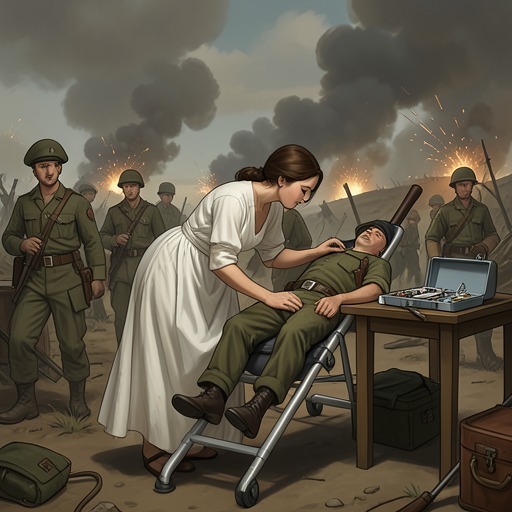
Walden’s service as a witness is interrupted by renewed violence. During a battle, plaster and splinters fill the Ruthven sitting room, and the wounded soldiers cry out for aid, believing the enemy may be close. Walden lies senseless beneath wreckage with blood flowing from a wound in his temple. Marion runs to raise him, and he is carried to another part of the house and placed on a fresh cot while she works to restore him.
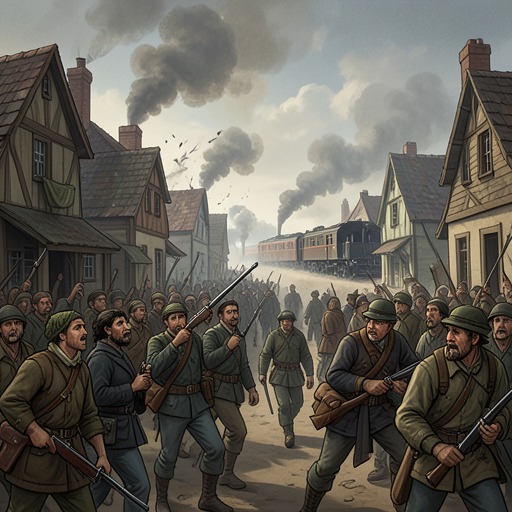
The danger is not limited to Walden. A cannon ball has passed through the sitting room, striking one of the wounded soldiers and later leaving that soldier with a high fever. The hospital flag is raised to a higher point on the mansion, making the household’s medical function visible amid combat. When Jack returns from investigating the burning at St. John Ruthven’s Plantation, he learns that Walden is badly hurt and that the surgeon has gone to the battlefield. Marion therefore insists that they must do the best they can themselves. In the same emergency, she reminds Jack that Walden knows Dr. Mackey, preserving the connection between physical care and the unresolved identity dispute.
Narrative Function and Significance
George Walden is a connective character between the battlefield, the hospital, and the domestic mystery. His hospital-corps background gives him access to knowledge unavailable to the Ruthvens, while his treatment in their home places that knowledge within a relationship of trust. He does not solve Jack Ruthven’s parentage, retrieve the wreck documents, or confront Dr. Mackey directly in the final resolution. Instead, he performs the crucial intermediate work of making Mackey’s claim legally and morally suspect.
His character also sharpens the novel’s contrast between forms of service. Walden has carried hundreds of wounded men and has himself endured a dangerous shoulder wound, yet he speaks modestly and cautiously. Mackey, by contrast, presents himself through the authority of a doctor and a supposed father while behaving brutally toward patients and constructing a fraudulent past. Walden’s testimony exposes the gap between social title and moral worth. Even after he is struck unconscious by battle debris, his earlier words continue to influence Jack’s understanding of the crisis, showing how a wounded soldier’s truthful account can outlast the power of an impostor’s assertion.